|
| Source: http://engl105062.web.unc.edu |
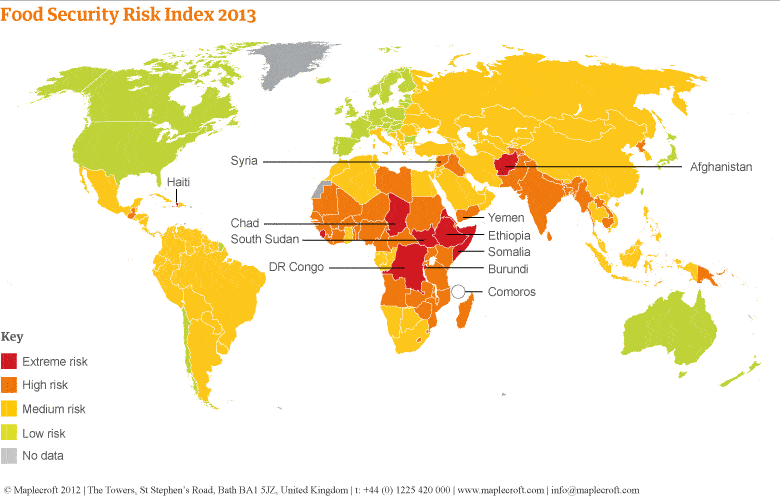
So, what's the deal with GM? Genetic Modification is when a species' genetic material (either DNA or RNA) has been altered in some way that is not specific to that organism, for example, through the switching on or off of certain characteristics within the genome, or by transferring genes from one organism to another (including different species). Regardless of the potential pros of this recent technology, there are strong public concerns over its safety within food production, and fear of its damage to human health, the environment and economies. A lot of these worries appear to stem from the prevalence of multi-billion agricultural biotechnology company, Monsanto, whose patents on a large proportion of crop seeds grants them a great deal of control and power over what we eat. This is undoubtedly a worrying matter. However, others seem to focus more on the safety of the food itself, as opposed to the inequality in its distribution or ownership... Despite this, the UN say that as a planet who are currently facing a huge crisis in terms of food security and malnutrition, we cannot justify ignoring the use of Genetic Modified Organisms (GMOs) in our food. So, is there anything wrong with GM food, or is it just in the wrong hands?
 |
| Source: www.livinglimitlessly.com |
For / Pros / Yea
Productivity:
- Crops can be genetically modified to become more resistant to certain stress factors, such as pests, weather conditions (e.g. drought or frost), and disease, making it less likely for their yields to fail. In some cases, this can increase the overall yield of crops and increase their adaptability to climate change and other environmental stress, which would provide more food globally, and ensure improved food security in the future. Additionally, this can pave the way for increased efficiency and future research in improving crops through GM methods.
- For animals, genetic modification has the potential to increase milk yields in cows, which can reduce the amount of dairy cattle needed, which in turn reduces their devastating impact on the environment, as described here.
Environment:
- GM crops can decrease the environmental destruction caused by chemical and industrial practices. For example, crops modified to be resistant to pests and disease dramatically reduce the amount of pesticides used on them. A study (conducted between 1996 and 2002) determining the environmental impact of pesticide use concluded that a reduction of 503 million kilograms led to a decreased direct carbon footprint of 18.7%, including an equivalent reduction in GHG emissions from 11.9 million cars (compared to the mass of CO2).
- The ability to produce more food on less agricultural land due to the increased productivity potential of GM crops. This reduces the need to cultivate new land.
- Additionally, we are able to rehabilitate degraded land, which again decreases the need to cultivate new land. This is achievable either through the introduction of organisms modified to increase soil quality and provide nutrients, or through the use of crops resistant to harsh conditions, such as drought or degradation.
- This available land can be used to create bio-fuels, modified to efficiently provide a lot of energy, whilst simultaneously reducing the need for fossil fuels.
- Increase the shelf life of food products, and in turn reducing the vast volumes of global food waste, which currently equates to approximately a third of all food!
Health:
- By the transfer of genes into crops, we have the potential to insert certain nutritional characteristics that may benefit consumers. Golden rice is an example of this, where the gene that encourages the production of vitamin A was transferred into certain rice crops. This advantage can decrease vitamin A deficiency, a condition that can lead to blindness, disease and death, and is prevalent in developing countries.
- The existence of GMOs allow us to experiment with medicines and vaccines, which can potentially save many lives and lead to become a more medically advanced society.
- They also enable us to learn more about certain diseases with carry genetic material.
- Lastly, we can identify certain allergens in food and organisms, thus leading to improved methods of prevention and possibly eradication.
 |
| Source: http://makeena.com |
Against / Cons / Nay
Socio-Economic:
- As mentioned previously, the ownership of certain GM crop seeds (often within the private sector) decreases farmers' capability to exist independently, and often runs them out of business. The idea of large companies dominating the market, and selling farmers' crops back to them at extortionate prices creates a monopoly in the market.
- This issue also affects the freedom of researchers, which is lost due to the ownership of property, and can reduce the speed in which research is developed.
- The well-known "terminator" feature of GM crops, stopping crop from reproducing the following season naturally, is designed to prevent the crossing of GM seeds with non-GM seeds, which can lead to complications described below. However, it also means that farmers cannot save seeds from one season to the next, and have little choice but to buy new ones again (likely at high prices).
Environment:
- It is a possibility that the genes through one GM species could be transferred unexpectedly to another through "gene escape". This could result in weeds developing herbicide-resistance, and thus damaging future crops. Out-crossing is heavily monitored prior to its introduction in agricultural practice, and has not yet indicated an increased risk of invasive species. However, this cannot be ruled out as a future possibility and issue.
- Unknown genetic mutations could potentially occur, with unknown consequences over future generations.
- During the modification, non-targeted (sleeper) genes should be accidentally be switched on, or equally important, active genes may be switched off, leading to unpredictable outcomes.
- The impact of GMOs on biodiversity or ecosystems is also hard to predict. For example, in the laboratory, Bt crops were shown to have a negative impact on certain butterfly species, however this was not reflected in real life.
- Additionally, the concern over insect resistance in Bt crops led experts to push for plans that require all fields containing insect-resistance crops to be accompanied by locations containing non-GM crops, to ensure insect biodiversity is maintained.
- GM crops aren't only a threat to animals, but also to crop biodiversity, either through the competition or crossing of these with wild species.
Health:
- A risk is the possible transfer of genes containing allergens into other crops, which may be a danger to allergy sufferers.
- There may be unapproved genetically modified food available on the market, which will require strict regulations and governance.
- Similarly to eating meat, GM foods have the potential to transfer resistance of antibiotics to humans (and livestock) which would make us highly susceptible to bacterial diseases, and may lead to increased deaths.
So, what do you think now? Yea or Nay? Please leave your opinions in the comments about where you think you are, and we can all have a gruelling debate! Even if you're still in the middle... Or if you have any questions at all, please do not hesitate to ask!
 |
| Source: www.civilbeat.com |