Showing posts with label crop. Show all posts

Thursday, 7 January 2016

Genetic Modification: Pro GMO or No GMO?

Source: http://engl105062.web.unc.edu
Genetic Modification (GM) of organisms and our food is incredibly hot topic in this day and age. The internet is full to the brim with very strongly opinionated articles about why you either should or should not be for the use of GM products. These opinions are cleverly disguised as facts, and are about as useful as a chocolate teapot... Thus, as a result, through time I have had friends who are vehemently against their existence, which often lead me to lean far the opposite way in the 'for' camp. However, over the last year or so, I have found myself dwindling back in the middle again - a reason I wanted to write this post in the first place. Despite this, I've been putting it off for weeks, trying to procure legitimate facts and rid my brain of preconceptions or little sound bites I've heard. So, please, if you're firmly in one camp or another, I ensure that you will benefit from reading further and understanding both the pros and cons, and extending that olive branch to your "GM-emies" (*cough* enemies *cough*) to finally end the disdain you feel... Otherwise, if you're in an argument with a strict "yes or no"-er, you can now have the upper hand of knowledge!

So, what's the deal with GM? Genetic Modification is when a species' genetic material (either DNA or RNA) has been altered in some way that is not specific to that organism, for example, through the switching on or off of certain characteristics within the genome, or by transferring genes from one organism to another (including different species). Regardless of the potential pros of this recent technology, there are strong public concerns over its safety within food production, and fear of its damage to human health, the environment and economies. A lot of these worries appear to stem from the prevalence of multi-billion agricultural biotechnology company, Monsanto, whose patents on a large proportion of crop seeds grants them a great deal of control and power over what we eat. This is undoubtedly a worrying matter. However, others seem to focus more on the safety of the food itself, as opposed to the inequality in its distribution or ownership... Despite this, the UN say that as a planet who are currently facing a huge crisis in terms of food security and malnutrition, we cannot justify ignoring the use of Genetic Modified Organisms (GMOs) in our food. So, is there anything wrong with GM food, or is it just in the wrong hands?

For / Pros / Yea


Productivity:
  • Crops can be genetically modified to become more resistant to certain stress factors, such as pests, weather conditions (e.g. drought or frost), and disease, making it less likely for their yields to fail. In some cases, this can increase the overall yield of crops and increase their adaptability to climate change and other environmental stress, which would provide more food globally, and ensure improved food security in the future. Additionally, this can pave the way for increased efficiency and future research in improving crops through GM methods.
  • For animals, genetic modification has the potential to increase milk yields in cows, which can reduce the amount of dairy cattle needed, which in turn reduces their devastating impact on the environment, as described here.

Environment:
  • GM crops can decrease the environmental destruction caused by chemical and industrial practices. For example, crops modified to be resistant to pests and disease dramatically reduce the amount of pesticides used on them. A study (conducted between 1996 and 2002) determining the environmental impact of pesticide use concluded that a reduction of 503 million kilograms led to a decreased direct carbon footprint of 18.7%, including an equivalent reduction in GHG emissions from 11.9 million cars (compared to the mass of CO2). 
  • The ability to produce more food on less agricultural land due to the increased productivity potential of GM crops. This reduces the need to cultivate new land.
  • Additionally, we are able to rehabilitate degraded land, which again decreases the need to cultivate new land. This is achievable either through the introduction of organisms modified to increase soil quality and provide nutrients, or through the use of crops resistant to harsh conditions, such as drought or degradation.
  • This available land can be used to create bio-fuels, modified to efficiently provide a lot of energy, whilst simultaneously reducing the need for fossil fuels. 
  • Increase the shelf life of food products, and in turn reducing the vast volumes of global food waste, which currently equates to approximately a third of all food!

Health:
  • By the transfer of genes into crops, we have the potential to insert certain nutritional characteristics that may benefit consumers. Golden rice is an example of this, where the gene that encourages the production of vitamin A was transferred into certain rice crops. This advantage can decrease vitamin A deficiency, a condition that can lead to blindness, disease and death, and is prevalent in developing countries.
  • The existence of GMOs allow us to experiment with medicines and vaccines, which can potentially save many lives and lead to become a more medically advanced society.
  • They also enable us to learn more about certain diseases with carry genetic material.
  • Lastly, we can identify certain allergens in food and organisms, thus leading to improved methods of prevention and possibly eradication.

Against / Cons / Nay

Socio-Economic:
  • As mentioned previously, the ownership of certain GM crop seeds (often within the private sector) decreases farmers' capability to exist independently, and often runs them out of business. The idea of large companies dominating the market, and selling farmers' crops back to them at extortionate prices creates a monopoly in the market.
  • This issue also affects the freedom of researchers, which is lost due to the ownership of property, and can reduce the speed in which research is developed.
  • The well-known "terminator" feature of GM crops, stopping crop from reproducing the following season naturally, is designed to prevent the crossing of GM seeds with non-GM seeds, which can lead to complications described below. However, it also means that farmers cannot save seeds from one season to the next, and have little choice but to buy new ones again (likely at high prices).

Environment:
  • It is a possibility that the genes through one GM species could be transferred unexpectedly to another through "gene escape". This could result in weeds developing herbicide-resistance, and thus damaging future crops. Out-crossing is heavily monitored prior to its introduction in agricultural practice, and has not yet indicated an increased risk of invasive species. However, this cannot be ruled out as a future possibility and issue.
  • Unknown genetic mutations could potentially occur, with unknown consequences over future generations.
  • During the modification, non-targeted (sleeper) genes should be accidentally be switched on, or equally important, active genes may be switched off, leading to unpredictable outcomes.
  • The impact of GMOs on biodiversity or ecosystems is also hard to predict. For example, in the laboratory, Bt crops were shown to have a negative impact on certain butterfly species, however this was not reflected in real life.
  • Additionally, the concern over insect resistance in Bt crops led experts to push for plans that require all fields containing insect-resistance crops to be accompanied by locations containing non-GM crops, to ensure insect biodiversity is maintained.
  • GM crops aren't only a threat to animals, but also to crop biodiversity, either through the competition or crossing of these with wild species.

Health:

So, what do you think now? Yea or Nay? Please leave your opinions in the comments about where you think you are, and we can all have a gruelling debate! Even if you're still in the middle... Or if you have any questions at all, please do not hesitate to ask!


Monday, 28 December 2015

Open Your Eyes: Sustainable Agriculture

Over the last few weeks, we have explored the largely damaging impacts of industrial agriculture, characterised by the exploitation of resources, large-scale single specie regimes, and high consumption of fossil fuels, pesticides and fertilisers. The destruction of this farming methodology is undeniable, from the emissions, pollution and deforestation of the livestock industry to the water depletion, desertification and toxic chemicals produced by crop production. This cannot go on indefinitely. But what can we do? Surely there are no other options?

Wrong! Sustainable agriculture is an alternative which, in its various practices, involves fulfilling present and future demands of food, water, health and ecosystem demands, whilst maximising societal benefits and environmental well-being. These systems typically focus on conserving resources, utilising natural ecosystem relationships between animals and plants, preserving biodiversity, reducing chemical inputs and incorporating renewable forms of energy. Additionally, sustainable agriculture tends to bring the consumer closer to the producer by decreasing the size of farms, distance travelled and emphasis on economic gains (that inevitably push hidden costs onto society), and in the long term sustaining healthy soil, land, communities and ecosystems.

What makes this type of agricultural more beneficial? In a world where resources and economic expansion are limited, we need to move away from our desire to drive profits, and push toward a more secure future. Sustainable agriculture tends to rely on small-scale, independent and local farms, which generate local employment, local spending and boost average incomes. Unsurprisingly, agribusinesses and farming industries are shown to do the opposite, with the core aim to turn high yields and profits at the expense of farmers, communities and the environment. These big businesses can actually be highly inefficient/ For example, despite rice farmers in Japan, Korea and Taiwan using more than 50% of all insecticides sprayed on rice globally, they yield only 2% of the Earth’s crops.

So, if sustainable agriculture benefits consumers, producers and the environment, why aren’t we doing it? Maybe the techniques used are hard to achieve? Wrong again! Here are some examples of the typical methods used by sustainable farmers:
  • Rotation of two or more crops – to reduce pests, increase biodiversity and soil fertility
  • Improved soil management –  by decreasing chemical inputs, and increasing organic material suitable for helpful bacteria and fungi
  • Maintaining topsoil – by reducing the use of heavy machinery on the soil, this is known as tillage
  • Allowing animals to graze rotationally – by relocating animals to different fields to improve soil quality, restore vegetation, and reduce high-protein feed, need for manure management and costs.
  • Nitrogen management – by decreasing use of high-protein feeds, fertilisers and pesticides, farmers can effectively monitor nutrient content in soil and prevent contamination of waterways and air quality.

I don't know about you guys, but this was always my idea of how normal farms operated (until discovering the reality and widespread existence of factory farms), and I ascertain that that is how they should be! So, what do we need to do to push for more of these systems?! 
  1. Raise awareness of the importance and social benefits of sustainable agriculture
  2. Campaign for climate and social justice in the agricultural sector
  3. Make sensible dietary choices that eliminate industrial means, i.e. opt for local, seasonal and organic produce
  4. Put press on industrial farms by holding them accountable!
  5. Reduce animal products, particularly from caged animals

Source: http://s.hswstatic.com


Sunday, 13 December 2015

Industrial Crop Production: Part 2 - Models Galore

Source: www.organicfacts.net/
Models are fundamental tools to helping us understand and predict real-life scenarios without having to meddle and tamper with them in actuality. Crop modelling is of particular importance to our society, particularly when considering the global population’s high dependence on the security, efficiency and existence of crops. Additionally, the large scale of systems like these raises a multitude of potential environmental implications that must be measured carefully and projected as accurately as possible.

However, there is some ambiguity and scepticism revolving around the use of models, especially within the field of crop modelling. In the last two decades, research has be launched to reduce the uncertainty prevalent in existing models through inter-comparison, scaling, development of code, removal of deficiencies and calibration of models to suit certain regions more effectively.

Below are some strong examples of models, or improvement projects, which have been utilised in last 15 years (and are, quite possibly, the cream of the crop!).


Sirius is a simulation model which focuses on a specific cereal, wheat, to estimate the growth of wheat in multiple conditions, including varying climate scenarios. Within the simulation, photosynthetically active radiation (PAR) (the wavelength range of photosynthesis, between 400nm to 700nm) is obtained, using satellite imaging, to measure the biomass, and net growth of wheat. The leaf area index (LAI) (the proportion of ground area covered by vegetation) is then found using a thermal-time model, in order to estimate the natural cycle of leaf appearance and fluctuation in wheat. From here, Sirius has been programmed to measure the nitrogen and water deficiencies in the crop, by combining observations of LAI over time with photosynthetic effect. The model has been successfully calibrated in Europe, New Zealand, Australia and USA, and has shown accurate results in the face of climate change.


The purpose of ATOPICA is to model the health risks and future trends of a particular allergenic pollen strain “Ambrosia” associated with the European influence of climate change, pollution and land-use changes. The aims of the project are:
  • Increase understanding of the interaction between environmental change and effects on sufferers of Ambrosia pollen-related allergies
  • Assessing the present and future risks associated with allergens
  • To formulate responses to outbreaks, and improve regulation, in a policy-making context

Source: www.atopica.eu/

ADAPTAWHEAT is a four year project, set to complete next month, after commencing in January 2012. Its aim is to improve crop yield and performance of wheat, and develop adaptation strategies against climate change, within Europe, by looking at particular genetic components and germplasm, for flowering time and its periodicity (phenology).


Source:www.rothamsted.ac.uk

LARS-WG conducts a time-series analysis of the weather in certain locations to assess the risk of weather on agriculture and hydrology, and make future predictions based on climate change scenarios. Version 5.0 of the LARS-WG model uses data from 15 Global Climate Models (commonly known as GCMs) to eliminate or reduce uncertainty in results which can stem from differences in model design. Examples of the weather measured include heavy precipitation, drought and heat waves, alongside normal everyday weather activity.


AgMIP, the Agricultural Model Intercomparison and Improvement Project, has the core objective to inter-compare multiple models, reduce uncertainty and calibrate them sufficiently, so that these crop models output more reliable results for future projects of baseline and other climate change scenarios. These predictions will be combined with economic models, to formulate appropriate adaptation strategies and enhance food security globally.

The main elements of the project are:
  • Inter-comparing crop models to reduce uncertainties in temperature, precipitation and greenhouse gas emissions
  • Juxtapose with observations of temperature, precipitation and GHG emissions
  • Developing stronger computer code and strengthening understanding of relationships within the system
  • Calibration of model based on region
  • Simulation impacts of soil health and water sources on agriculture
  • Utilising models to develop suitable adaptation strategies

The crops tested within the context of AgMIP were originally wheat, maize, rice and sugarcane, with expansion now allowing to modelling of potato, sorghum-millet, peanut (groundnut) and soybean.
Source: www.agmip.org


MACSUR take a similar approach to AgMIP with their CropM project, which aims to improve the quality of crop models by reducing uncertainty through inter-comparison, scaling methodologies, data compilation, and inclusion of (often neglected) factors, such as, impact of climate change on flowering and the use of crop rotation modelling. By linking crop and soil modelling, they are able to obtain a stronger, more accurate depiction of reality, which will help them develop stronger adaptation and mitigation strategies to climate change, and well as strengthen global food security.
Source: www.hoffmann.wf

Saturday, 12 December 2015

Industrial Crop Production: Part 1 - Environmental and Social Impacts

Hellooo, and welcome back! I hope you all enjoyed getting creative and discovering new recipes with the COP21 Recipe Challenge. Now, I’d like to return to our critical analysis of certain food production practices, with the focus of today being: Industrial Crop Production.

We have so far learned about the environmental impacts of the livestock industry, which have left many presenting me with a case for pro-veganism. However, we must not forget that plant-based diets also have a major effect on the environment, and that by simply omitting meat and dairy from our diets does not come without its own set of problems! So, what’s the planet’s beef with industrial crop production?

Land-Use Change and Deforestation

http://s.hswstatic.com/
Crop production is a major driver of land-use change and deforestation. As discussed previously in relation to livestock production, the conversion of forestland threatens native species, ecosystems, and displaces and releases vast stores of carbon, decreasing the Earth’s ability to absorb excess carbon dioxide from the atmosphere.

However, despite the millions of individuals in the world who live in food poverty, a large proportion of these crops are not grown specifically for human food consumption. According to the FAO, up to 33% of cropland is utilised in livestock feed, with further significant percentages being designated to the production of medicine, clothing, alcohol and biofuels. According to an article in TIME magazine, 25% of the corn harvested in the United States, in 2007, was used toward biofuel production. Although the conversion of crops to biofuels sound beneficial in theory, this raises serious concerns in terms of global food security, at the expense of choosing “clean energy” cars (for our own non-mandatory satisfaction) over feeding the planet. Despite this, the use of biofuels are not as widely spread in all other parts of the world, and thus are not necessarily an immediate threat to food security.

Irrigation and Water Resource Depletion

Graph: Comparison of yield between irrigated (blue) and rain-fed crops (orange)
Source: 
www.fao.org/docrep/006/y4683e/y4683e07.htm
With around 1.2 billion people in the world living in areas of water insecurity, the preservation and use of water in agriculture is of incredibly high importance. As demonstrated in the graph, crops fed with irrigated water produce much higher yields than rain-fed crops, with some results showing a yield of 2 to 3 times as high. This is great news in terms of global food security, however, as with everything in life, irrigation comes with its own set of environmental and ethical problems:
  • Groundwater and water source pollution through the use of fertilisers and pesticides
  • Reduced availability and/or quality of water for humans and other wildlife, i.e. water depletion
  • Decrease in agricultural employment, and less available jobs
  • Soil and land degradation, soil acidification and salinization
  • Change in river hydrology or flow
  • Increased evaporation of water within the system
  • Higher occurrences of waterlogging, i.e. soil saturated with water

Desertification

https://www.wageningenur.nl/
Desertification is a type of land degradation caused by the conversion of arid, semi-arid or grass land into desert through either direct or indirect human activities, or changes in climate. Typical causes of desertification include poor land-use management, deforestation, agriculture, overgrazing, excessive use of water and excessive cultivation of crops.

This poses a threat to global food security, as the more land that is degraded, the less available land there is to use for agriculture. With the population set to increase from 7 billion to 9.6 billion by 2050, the reduction of available agricultural land will put an immense pressure on the need for further deforestation and land-use change projects. It is estimated that almost one-sixth of the land surface is already affected by desertification to an extent.

Additionally, this change in natural environment will also have a great impact on biodiversity loss and ecosystem changes which, in turn, has a knock-on effect on faraway areas.

Fertilisers

The use of fertilisers in food production is a controversial issue, particularly amongst organic food lovers. Their capacity to allow the expansion of potential food production and feed our vast population is undeniable, yet their power to wreak havoc with the environment is equally something that we cannot ignore.

Contamination of groundwater and surface through high use of fertilisers is a common occurrence, and can increase the amount of nutrients and pollutants in the water sources, leading to eutrophication, health expenses, water treatment costs, increased mortality in fish and other aquatic or land species. Additionally, the commercial and widespread use of fertilisers can lead to poor soil health, which includes soil degradation, pollution and acidification.
http://www.latrobefertilisers.com.au/
Fertilisers are not just a pollutant of water, but also a potential air pollutant. Their emissions of various nitrogen oxides increase tropospheric ozone, which is caused by the reaction between nitrogen oxides and sunlight. This can have a damaging effect on the health, biodiversity and crops themselves. It is predicted that 35% of cereals are already vulnerable to high levels of tropospheric ozone.

Lastly, we cannot forget that the manufacturing process to produce fertilisers require vast quantities of fossil fuels, particularly the use of natural gas. Thus, from an environmentalist’s perspective, fertilisers are a further dependence on fossil fuels, which we are trying to diverge away from!

Yet, this puts me, and probably you too, in a serious dilemma. Realistically, food production is so highly dependent on the use of fertilisers, and so to totally eradicate them would likely cause mass global hunger and mortality. However, their environmental impacts are leading to a similar fate. The latter is slower, with possible mitigation strategies in the future, but is highly unethical. Maybe a gradual phasing out of fertilisers would be a good solution? Although, I’m not entirely sure if that’s possible, with such a high population to feed… If anyone could give their insight on that one, I’d be really interested to hear your views!

Pesticides

Pesticide use, including herbicides, insecticides, fungicides and disinfectants, are another controversial aspect of crop production. They carry similar environmental impacts to fertilisers, for example, water contamination, air pollution, soil degradation and pollution, human health and ecosystems.

http://evanslab.org.uk/
The most known environmental or ecological impact is the effect of pesticide use on bees. Honey bees, in particular, are exposed to pesticides due to their high dependence on crops, such as, maize, sunflower and oilseed rape. Bees often transport pesticides in pollen and nectar, and store it within the hive, leaving non-foraging bees exposed to toxic effects of pesticides. This is supposedly taken into account by pesticide manufacturers, who ensure that doses of neonicotinoids (the damaging toxin) are below what is considered lethal (without a controlled setting)(. Despite this, decline in bee populations are still prevalent through the exposure of sub-lethal doses of neonicotinoids in pesticides. As common pollinators of major food sources, including commercial crops, this could have a potentially devastating impact on the food web and ecosystems.

Furthermore, the use of pesticides becomes a bit of an arms race between humans and pests. It is thought that within approximately 10years, most insects become resistant to insecticides, and for some bacteria this resistant to antibiotics can occur within 1-3 years. In this respect, it’s a never-ending struggle, with the end result being super-resistant pests with more potential of harm to human health.

Monocropping

http://1.bp.blogspot.com/
Monocropping is an agricultural practice where only a single crop is grown in an area from year to year, without rotating. Crop rotation is important for increased soil health and quality, thus monocropping leads to soil degradation and smaller yields. If soil degradation persists over time, this could lead to the land being usable for agricultural purposes, and thus reducing the amount of available land for food production.


The genetic uniformity of crops contributes to a lack of biodiversity in animal and plant species, as well as increase the crops’ susceptibility to pests and disease, hence the heightened use of pesticides in crop production. With 60% of the human food source dependent on only three cereals (wheat, rice and corn), this makes monocropping a huge threat global food security.


Saturday, 7 November 2015

The Dawn of Agriculture

Agriculture is estimated to have popped up around 10,000 years ago, synonymous with the end of the last major ice age and a new era, known as the Holocene epoch (our current epoch!).This era has been marked by the ever-increasing development of human technology and ingenuity, and agriculture has been no exception! But what actually is agriculture? How and why did it begin? And what impact has it had on the environment over time?

Just in case you’re not quite clued up about agriculture, I’ll start us off with a formal definition… According to the Oxford English Dictionary, agriculture is “the science or practice of farming, including cultivation of the soil for the growing of crops and the rearing of animals to provide food, wool, and other products”. So, in a NUTshell, agriculture exists to feed us, clothe us and medicate us (amongst a million other things) through the process of farming, with the two main divisions of agriculture being livestock farming and crop production.

This concept of agriculture seems pretty routine these days, but how did we come up with it in the first place? What techniques did we use? And what caused us to transition from hunter gatherers to farmers?

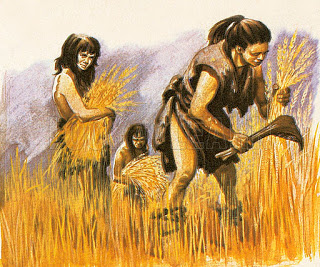
                Source: https://lygsbtd.files.wordpress.com/                       Source: https://o.quizlet.com/

For many years, early man relied on sustenance from fruits, nuts and megafauna, like mammoths, until their untimely extinction approximately 15,000 years ago, when humans turned to hunting smaller game (look at last post for more details!!!). After which, came another period of intense global cooling, known as the Younger Dryas, which saw ice returning and woodland decreasing, leaving food to become more scarce for the next few thousand years…

Once the climate recovered from these tundra conditions, it appeared that agriculture arose not long after. However, its reason for rearing its head is still a topic of wide debate. One hypothesis claims that the warm weather succeeding the Younger Dryas caused a “baby boom” = more mouths to feed! This increase in demand is thought have forced us to seek more sustainable food sources, such as the domestication of animals and cultivation of plants. Although, it’s still not definitively known whether agriculture was a response to an increasing population, or whether an increasing population was product of booming agriculture. In this latter instance, opinion is divided between the idea that agriculture was a response to intense hunger, or was discovered through the experimentation of farming.

To open the debate even WIDER, some believe that origins of agriculture stem from a single, intelligent individual whose idea spread rapidly as an improvement beyond foraging (agricultural revolution), whilst others believe that civilisations used their knowledge of plants and the land to accompany foraging with agriculture, as a back-up plan when hunting was not so fruitful (agricultural evolution). Regardless of how, agriculture was happening, and was beginning to consume the Earth…

Map to illustrate believed first sites of agriculture. Source: www.life.illinois.edu/

Crop cultivation and selective breeding were some of the earliest agricultural practices. Examples of this include: cereals in Syria (c.7000BC), seedless fruits from fig trees in Jordan (c.9300BC), rice fields in China, cultivation of squash in Mexico (c.8000BC), and corn in North America some years later (approx. 3000BC). Alongside this, the domestication of animals (that we still most commonly eat today!) began approximately 10,000 years ago. This can be seen in the DNA of Europeans, especially...  Many of our ancestors were initially unable to tolerate cow’s milk, however, genetic mutations leading to lactose tolerance occurred through natural selection due to prevalence of cow herding in Europe, allowing a large proportion of us to drink milk today. Evolution in front of our very eyes!

However, you can’t make an omelette with breaking some eggs… This method of cultivating plants caused an increasing genetic uniformity, allowing them to become more susceptible to pathogens and disease (with species competition transitioning from interspecific to intraspecific). The same story was said for domesticated animals: their predictability created an environment that allowed contagious diseases to thrive. This began the race between man and contagion (an issue still very much prevalent in today’s world), giving rise to the pesticide!


Additionally to disease, evidence shows that this new age of agriculture may have had a huge impact on our climate, with an estimated global temperature increase of 1.5°F!! Large-scale burning and up-rooting of forests, to allow room for farming, led to vast releases of carbon dioxide (the most notable greenhouse gas) into the atmosphere, causing a global warming. However, the removal of forests would have likely made the surface of the Earth brighter and more reflective (known as “albedo”), causing sunlight to bounce off of the surface more often, resulting in a cooling effect. Although, deforestation can also cause a shift in micro-climate, which has serious impacts on food production and food security over time. We truly were meddling beings!!


Our effect on the environment has been obvious (yet completely surprising!) through the ages… Join me next time to see how we’re continuing the trend in today’s world, and what that means for the future of global food production…